
Beyond Cheapness: Uruguay’s Cost of Living and the Price of Moving Upmarket
A widely shared social-media graphic describes Uruguay as South America’s most expensive country. The underlying 2025 Numbeo figures are real: Uruguay recorded a Cost of Living Index of 46.3 and a Rent Index of 12.5. The headline is therefore understandable, but it is not sufficient for an investment decision.
Executive summary
- The original infographic correctly reproduces Uruguay’s 2025 Numbeo Cost of Living and Rent indices, but its combined figure is created by adding two indices that are not designed to be added.
- Numbeo already published an official Cost of Living Plus Rent Index for Uruguay: 31.3 in 2025, rather than the derived figure of 58.8.
- In the 2026 mid-year South American ranking, Uruguay remains the regional leader for living costs excluding rent, at 54.0.
- Uruguay’s combined index is 35.9, below Guyana’s 39.9, showing that housing materially changes the ranking.
- In Numbeo’s global 2026 country snapshot, Uruguay’s everyday costs exceed those of Spain and Portugal, while its combined cost-with-rent measure is slightly lower than both.
- A high cost of living does not establish a case for property appreciation or rental returns. It makes asset selection and full-cost modelling more important.
- Uruguay’s institutional strengths support a risk-adjusted value proposition, but rankings are evidence of relative positioning, not guarantees.
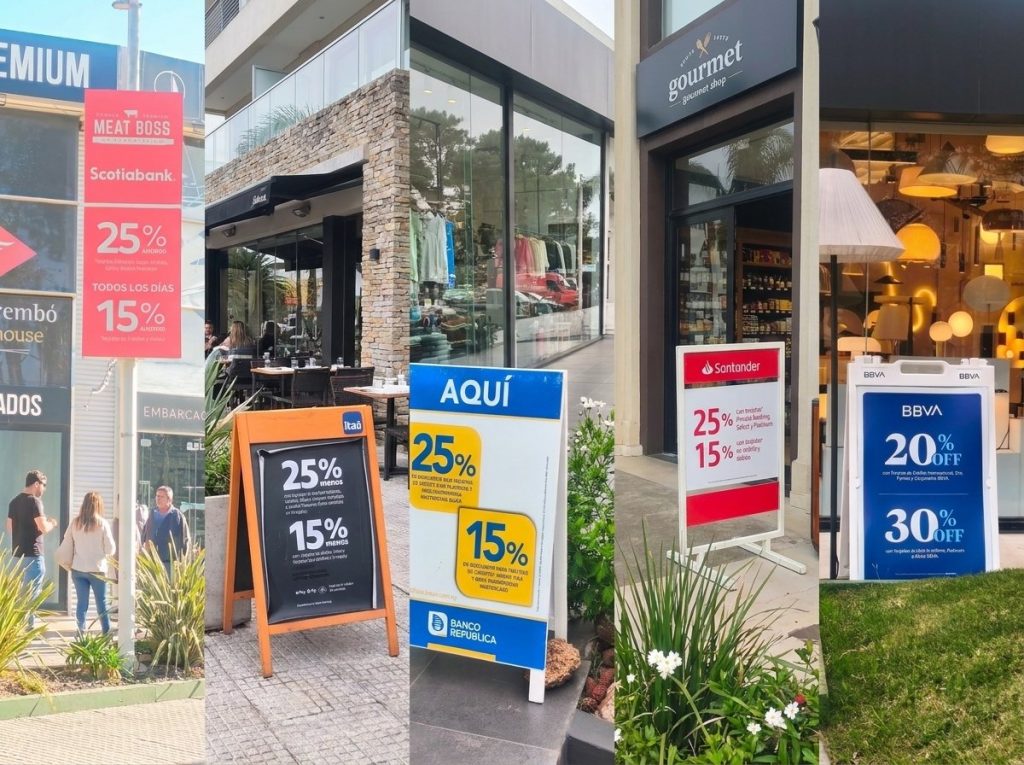
- The move upmarket in Punta del Este, José Ignacio and the coastal corridor towards Rocha may place upward pressure on land, housing and services. This is double-edged: it can support investment and infrastructure while also reducing affordability and encouraging speculative pricing.
What the Numbeo indices actually measure
Numbeo uses New York City as a reference point of 100. A score of 54 does not mean Uruguay is 54% more expensive than another country. It means the relevant basket is estimated at roughly 54% of the New York reference level.
Four separate measures matter:
- Cost of Living Index: consumer expenses excluding residential rent;
- Rent Index: apartment rental prices relative to New York;
- Cost of Living Plus Rent Index: Numbeo’s weighted combination of consumption and housing;
- Local Purchasing Power Index: prices viewed against reported average net salaries.
The shared graphic adds 46.3 and 12.5 to obtain 58.8. That is a derived score, not Numbeo’s official combined measure. For 2025, Numbeo reported Uruguay’s Cost of Living Plus Rent Index at 31.3.
This distinction is central. Adding the two headline numbers overstates the combined burden and prevents a like-for-like comparison with countries using the official weighted index.
Numbeo is useful, but it is not a national consumer price index. Its database combines contributor submissions, automated market inputs, outlier controls, recency weighting and country-level aggregation. It should guide initial comparisons, not replace official statistics, local quotations or a household-specific budget.
The South American picture in mid-2026
The mid-year 2026 release confirms that Uruguay is the most expensive South American country for everyday costs excluding rent. The broader table, however, produces a more balanced result.
| Country | Cost of Living | Rent | Cost of Living + Rent | Local Purchasing Power |
|---|---|---|---|---|
| Uruguay | 54.0 | 14.4 | 35.9 | 56.8 |
| Guyana | 53.0 | 24.4 | 39.9 | 47.9 |
| Argentina | 44.9 | 12.8 | 30.2 | 44.8 |
| Chile | 38.7 | 10.6 | 25.8 | 50.4 |
| Brazil | 33.1 | 8.6 | 21.9 | 44.3 |
| Paraguay | 32.0 | 10.8 | 22.3 | 49.1 |
Source: Numbeo, South America country ranking, 2026 Mid-Year. These figures are periodic statistical snapshots and may change.
Uruguay leads on consumption costs, but not on the combined housing-adjusted measure. It also records the strongest local purchasing-power score among the South American countries included in the release. That measure is not directly relevant to a foreign resident earning offshore income, but it illustrates why price data should not be read without income context.
Why housing changes the European comparison
Many prospective Uruguay residents are not choosing between Uruguay and Paraguay. Their shortlist may include Spain, Portugal, France, Italy or another international mobility jurisdiction.
Numbeo’s global 2026 country snapshot shows that Uruguay’s day-to-day consumption is more expensive than Spain or Portugal. Yet lower national rent values narrow the overall gap.
| Country | Cost of Living | Rent | Cost of Living + Rent |
|---|---|---|---|
| Uruguay | 55.6 | 14.7 | 37.3 |
| Spain | 51.6 | 23.2 | 39.0 |
| Portugal | 48.8 | 25.2 | 38.3 |
| France | 67.7 | 22.3 | 47.5 |
Source: Numbeo, global 2026 country snapshot. This is a consistent annual dataset and should not be merged directly with the separate 2026 mid-year regional release.
The table does not prove that Uruguay is cheaper than Southern Europe for every household. National averages conceal substantial differences between Punta del Este, José Ignacio, Montevideo, Madrid, Lisbon, Paris and secondary cities.
It does show that a high grocery or restaurant bill does not automatically produce the highest total relocation cost. Housing, schooling, healthcare, transport, travel frequency and lifestyle determine the real outcome.
The cost of ambition: what happens when a destination moves upmarket?
A further pillar belongs in the analysis: Uruguay is not seeking to differentiate itself from neighbouring countries by becoming the cheapest destination. Its proposition rests more heavily on stability, legal security, quality of life, its Atlantic coastline and its ability to attract investors, entrepreneurs and internationally mobile wealth.
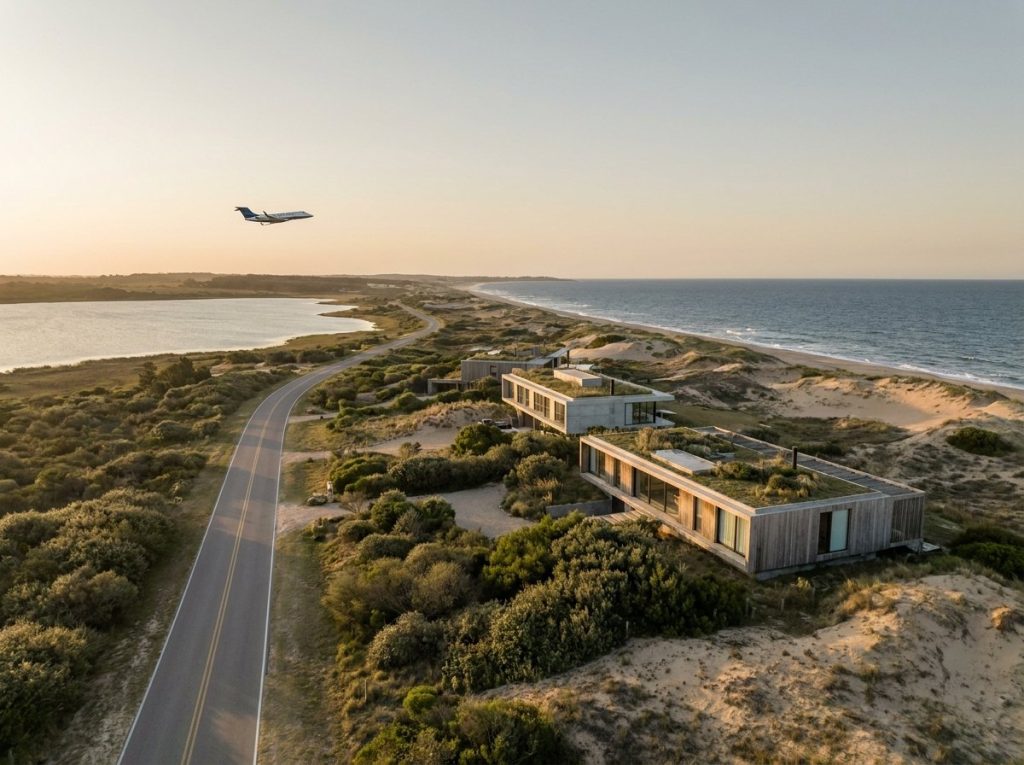
Punta del Este and José Ignacio already occupy a distinctive position within this market narrative. The gradual development of the coast through Maldonado and towards Rocha supports what Punta Select Club describes as the future Uruguayan Riviera. This is a strategic and editorial interpretation of the coastal corridor, not an official administrative label or the formal name of a government programme.
Moving upmarket has an understandable economic consequence. An inflow of higher-income residents, international capital, hospitality projects, premium homes and specialised services increases demand for land, construction, housing, restaurants, leisure and skilled labour. It may therefore contribute to higher prices, particularly in the most sought-after coastal micro-markets.
This is not an automatic law and it is not a complete explanation for national inflation. Prices also reflect market size, import costs, indirect taxation, competition, wages, infrastructure and available supply. Premiumisation may explain part of the pricing premium in selected locations, but not Uruguay’s entire cost-of-living profile.
International comparisons help clarify the mechanism. Switzerland, Singapore, Dubai and Miami did not become major centres for capital, services and international residence by promising to be inexpensive. Their attractiveness coexists with high costs, partly because they concentrate solvent demand, scarce land and high-value services.
A double-edged development
For Uruguay, the transition may bring investment, urban renewal, infrastructure, employment, stronger international connectivity and appreciation in selected assets. It can also reduce affordability for local residents, place pressure on rents, reinforce seasonality, standardise the offer and produce asking prices supported more by narrative than by effective demand.
A premium destination being expensive is not, by itself, a defect. The premium becomes investable only when it is supported by durable demand, infrastructure, legal security and sufficient exit liquidity.
For Punta Select Club, the challenge is therefore twofold: identify locations and projects that may benefit from this transition before the entire expected revaluation is embedded in prices, while avoiding a present-day “Riviera premium” that is not yet supported by market fundamentals.
From affordability to risk-adjusted value
Cost and institutional quality are different concepts. They should not be conflated. However, an internationally mobile family may evaluate them together when deciding where to live, hold property or create a second base.
Uruguay’s institutional position remains comparatively strong:
- the World Justice Project ranks Uruguay 23rd out of 143 jurisdictions in its 2025 Rule of Law Index;
- Transparency International gives Uruguay 73 out of 100 in the 2025 Corruption Perceptions Index, placing it 17th out of 182 countries and second in the Americas after Canada;
- Uruguay XXI states that foreign and domestic investors receive the same general incentives and that there are no general restrictions on transferring profits abroad or operating in foreign exchange;
- Henley’s 2026 wealth-mobility framework gives Uruguay a competitiveness score of 71.8, citing institutional quality, rule of law, geopolitical stability and fiscal competitiveness;
- the May 2026 Global Investment Risk and Resilience Index places Uruguay 34th with a score of 69.28.
These results require context. Henley’s score is not a measure of actual millionaire inflows. Uruguay’s World Justice Project score declined slightly in 2025, and its Transparency International score fell from the previous year. Strong relative positioning does not eliminate policy, market or execution risk.
For investors, the value of these indicators lies in comparison. They suggest that Uruguay may command a premium partly because it offers a degree of legal and political continuity that is less common in the region.
What a high cost of living does not prove
It does not prove real-estate appreciation
Consumer prices do not determine future property values. Appreciation depends on location, land scarcity, buyer depth, project quality, credit conditions, infrastructure and the supply pipeline.
It does not make every premium asset liquid
A high-end villa or large beachfront apartment may be exceptional and still require a long marketing period. Quality and liquidity are separate attributes.
It does not describe every part of Uruguay
Montevideo, Maldonado, Punta del Este, La Barra and José Ignacio have different price structures. Even within Punta del Este, Mansa, Brava, Roosevelt and the Peninsula serve distinct demand segments.
It does not determine a resident’s tax outcome
Living costs, legal residence, tax residence and wealth structuring are separate matters. The tax result depends on the person’s facts, source of income, home-country rules and applicable treaties.
Investment implications for Punta del Este and Uruguay
In a premium market, the investor’s task is not to find the lowest advertised price. It is to determine whether the premium is supported by evidence.
A disciplined review should include:
- comparable transaction values rather than listing prices alone;
- the developer’s track record, contractual protections and delivery capacity;
- condominium fees, taxation, insurance and maintenance;
- seasonal and year-round rental demand;
- net yield after vacancy, management and operating costs;
- the likely resale market and expected holding period;
- the owner’s personal-use objectives;
- currency exposure and the opportunity cost of committed capital.
For every new-build property offered or sold through Punta Select Club, no real-estate commission is charged to the buyer. This removes one transaction cost, but it does not replace legal, technical and financial due diligence.
Opportunities created by a more honest narrative
The cost-of-living discussion is valuable because it allows Punta Select Club to avoid the language of a cheap destination or tax haven. Uruguay’s more credible positioning is that of a structured, relatively stable and internationally accessible jurisdiction where quality assets must be selected carefully.
Potential value may exist when a property combines:
- an address with demonstrable demand;
- a rational entry price supported by comparables;
- sound construction and a credible developer;
- manageable ongoing charges;
- a clear target tenant or end-buyer profile;
- practical management for a non-resident owner;
- a holding period compatible with market liquidity;
- independent legal, tax and technical review.
The strongest commercial message is therefore not that Uruguay is inexpensive. It is that an informed buyer can distinguish a justified premium from an inflated one.
Risks and points to verify
- National averages: they do not represent a specific household, city or neighbourhood.
- Crowdsourced inputs: Numbeo is a comparison tool, not a substitute for official data or quotations.
- Coastal seasonality: occupancy and pricing in Punta del Este can vary sharply between summer and the rest of the year.
- Condominium costs: full-service towers may materially reduce net rental returns.
- Foreign-buyer pricing: asking prices may not always reflect closed transactions or local negotiating conditions.
- Liquidity: larger or highly specialised assets may take longer to sell.
- Regulatory change: tax, residence and property rules should be rechecked before execution.
- Construction risk: off-plan purchases require scrutiny of contracts, guarantees, schedules and developer solvency.
Conclusion
Uruguay is expensive by South American standards for many day-to-day items. Denying that would weaken investor trust. Treating it as the whole story would be equally misleading.
Housing changes the regional and international comparison. Institutional indicators help explain why globally mobile families continue to consider the country. Neither factor turns every property into a good investment.
Part of the premium may also reflect an ambition to position Punta del Este, José Ignacio and the eastern coastline as a higher-value international corridor. Inflows of capital, projects and high-net-worth residents may support investment and service quality, but they also increase the risks of overpayment and reduced affordability. This is a potential opportunity, never a guarantee.
Uruguay is not a low-cost jurisdiction. It can be a high-value jurisdiction when the asset, entry price and investment structure are selected with discipline.
The decisive distinction is between an expensive country, an expensive property and an overpriced property. Serious buyer coordination begins by separating those three ideas.
Frequently asked questions
Is Uruguay the most expensive country in South America?
Uruguay ranks first in Numbeo’s 2026 mid-year South American Cost of Living Index excluding rent, at 54.0. It does not rank first in the combined Cost of Living Plus Rent Index, where Guyana is higher. The answer depends on the measure used.
What does a Cost of Living Index of 54 mean?
Numbeo uses New York as a reference value of 100. A score of 54 means the selected basket is estimated at approximately 54% of the New York reference level. It is not an inflation rate and does not mean Uruguay is 54% more expensive than another country.
Can the Cost of Living and Rent indices be added together?
No. They measure different components and require weighting. Numbeo already publishes a combined index. Uruguay’s official combined score was 31.3 in 2025, not the 58.8 obtained by simple addition.
Is Uruguay more expensive than Spain or Portugal?
Everyday consumption is higher in Uruguay in Numbeo’s global 2026 snapshot. However, the lower national Rent Index brings Uruguay’s combined score slightly below Spain and Portugal. A real decision must compare specific cities, housing choices and lifestyles.
Does a high cost of living support property prices?
Not by itself. Property performance depends on local supply, buyer demand, location, quality, liquidity, financing and the entry price. An expensive country can contain both excellent and overpriced assets.
Could the development of an “Uruguayan Riviera” push prices higher?
An upmarket evolution of the Punta del Este–José Ignacio–Rocha corridor may place upward pressure on land, housing, construction and selected services when it is supported by solvent demand and lasting investment. “Uruguayan Riviera” is an editorial positioning rather than an official designation. Price growth will not be uniform or guaranteed; it depends on location, infrastructure, market depth and the entry price.
Which costs should a foreign buyer include?
The model should include purchase price, transaction and professional costs, taxes, condominium fees, insurance, furnishing, maintenance, management, vacancy, repairs and disposal costs. Off-plan projects also require a review of payment timing and delivery risk.
Are foreign investors treated in the same way as local investors?
Uruguay XXI states that foreign investors receive the same general incentives as domestic investors and face no general restrictions on profit transfers or foreign-exchange operations. Each property transaction should still be reviewed by a qualified escribano and other relevant professionals.
What role does Punta Select Club perform?
Punta Select Club is a private investor community and a structured first point of entry into Uruguay. It provides educational information, market orientation, selected access and buyer coordination through authorised local partners. It is not a real-estate agency, broker or regulated advisory firm.
Sources
- Numbeo — South America: Cost of Living Index by Country 2025.
- Numbeo — South America: Cost of Living Index by Country 2026 Mid-Year.
- Numbeo — Cost of Living Index by Country 2026.
- Numbeo — Understanding the Cost of Living Indexes.
- Numbeo — Methodology and Motivation.
- Henley & Partners — Latin American Wealth Mobility Anchors, 2026.
- Henley & Partners — Global Investment Risk and Resilience Index, May 2026.
- Visual Capitalist — The World’s Top Destinations for Wealth Migration, 2026.
- World Justice Project — Rule of Law Index 2025: Uruguay.
- Transparency International — Uruguay, Corruption Perceptions Index 2025.
- Uruguay XXI — Foreign Investor FAQ.
- Uruguay XXI — Invest in Uruguay.
- Uruguay XXI — Construction and Real Estate Report.
Discussing a project in Uruguay
Would you like to understand the Uruguayan property market, compare locations or prepare the first steps of a project in Punta del Este, Maldonado or Montevideo?
Punta Select Club provides a structured first point of entry for a private discussion with our team and, where appropriate, introductions and buyer coordination through authorised local partners.
For every new-build property offered or sold through Punta Select Club, no real-estate commission is charged to the buyer.
Disclaimer
This article is published solely for informational and educational purposes. The information reflects the sources and knowledge available on the publication date. Regulations, taxation, public policy, statistical indices and market conditions may change without notice.
Cost-of-living indices are aggregated indicators. They are not a personal budget, property valuation, return forecast or investment recommendation. All information should be independently verified before any purchase, residence, relocation or investment decision.
This content does not constitute legal, tax, financial, wealth, immigration or real-estate advice. Each case requires advice from appropriately qualified and, where required, licensed professionals in the relevant jurisdictions.
Punta Select Club acts as an information, orientation, selected-access and coordination platform working through authorised local partners.