Property orientation in Punta del Este: why winter sun should be part of every buyer’s due diligence.
International buyers often arrive in Uruguay with a northern-hemisphere reflex: south means sun. In Punta del Este, that logic reverses. For year-round living, true north is the key solar reference, and the best sea view may point in a very different direction.
Introduction: a small geographical detail with a large residential impact
In France, Spain, Belgium or the United Kingdom, a south-facing home is typically associated with winter sun. Buyers who carry that assumption into Uruguay can misread a floor plan before they have even visited the property.
INUMET’s automatic weather station in Punta del Este is located at 34.96893° south and 54.95122° west. At this latitude, the winter sun tracks across the northern half of the sky. North-facing glazing is therefore the natural reference for passive winter solar gain.
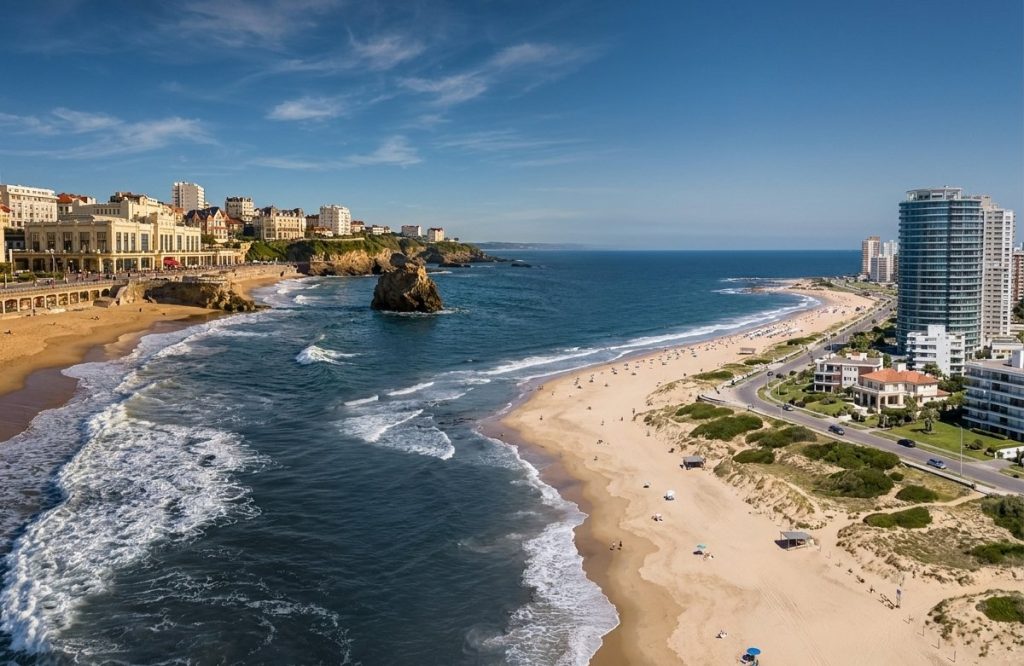
That matters in a coastal market where buying decisions are often view-led. Atlantic frontage on Brava, sunset views on Mansa and ocean panoramas from Manantiales or José Ignacio are compelling. But the façade that delivers the view is not necessarily the façade that delivers the most useful winter sun.
Executive summary
- True north is the primary orientation for maximising winter solar gain in Punta del Este.
- A north-west bias can extend useful sun into the afternoon; a north-east bias favours the morning.
- Orientation on a brochure is not enough: neighbouring towers, trees, topography and floor level can remove hours of winter sun.
- On Brava and along much of the coastal corridor towards José Ignacio, ocean-facing façades can point east, south-east or south — excellent for views, not necessarily for winter passive heating.
- Solar exposure helps comfort, but it does not replace proper glazing, insulation, moisture control, ventilation and waterproofing.
1. Why north matters in the Southern Hemisphere
The principle is basic solar geometry. In the Northern Hemisphere, the midday sun is to the south. In the Southern Hemisphere, it is to the north. Passive-solar guidance developed for temperate Southern Hemisphere climates therefore prioritises north-facing living spaces when winter heating is desirable.
Australia’s government-backed YourHome guidance describes solar north as the ideal orientation for passive heating in cooler and temperate climates and identifies an effective band of roughly 15° west to 20° east of north. This is not an Uruguayan planning rule; it is a useful building-physics benchmark.
| Time of year | Approximate solar-noon elevation in Punta del Este | What it means for a home |
|---|---|---|
| Winter solstice, around 21 June | 31.6° | Low-angle sun can reach deep into north-facing rooms. |
| Equinoxes | 55° | Moderate solar penetration. |
| Summer solstice, around 21 December | 78.5° | High-angle sun is easier to control with properly designed overhangs, balconies or shading. |
These are geometric approximations based on Punta del Este’s latitude and NOAA solar-position equations. The practical lesson is straightforward: north can admit the low winter sun while a well-designed horizontal shade can block much of the high summer sun.
2. North, north-west or north-east?
There is a difference between maximising total winter solar access and tailoring a home to the way it is used.
| Orientation | Typical solar pattern | Buyer perspective |
|---|---|---|
| North | Best overall winter balance | Strong default for four-season living. |
| North-north-west / north-west | More afternoon sun | Useful for living rooms occupied later in the day; summer shading becomes more important. |
| North-north-east / north-east | More morning sun | Attractive for bedrooms, breakfast areas and early-day use. |
| East | Morning sun | Bright early, cooler later. |
| West | Afternoon sun | Pleasant in winter but harder to shade in summer. |
| South | Limited direct winter sun | Can work with dual orientation or a high-performance envelope. |
3. Playa Brava: Atlantic frontage is not automatically winter-friendly
The official Maldonado map places Playa Brava on the eastern, Atlantic side of the peninsula. Apartments designed primarily around the ocean can receive attractive morning light and sunrise views, but east- or south-east-facing glazing should not be confused with a north-facing winter solar strategy.
For year-round buyers, corner units can be particularly valuable when they combine an Atlantic view with a second façade opening north or north-west. The internal layout then matters as much as the building’s address.
4. Playa Mansa: afternoon sun is valuable, but west is not the same as north
Mansa sits on the western, Río de la Plata side. Water-facing units can benefit from afternoon sun and sunset light, both desirable in winter. Yet the shoreline curves and each tower sits differently, so a “Mansa-facing” label does not tell a buyer the exact azimuth of the living room or terrace.
A north-west corner or a through-plan with genuine northern exposure can provide a more complete four-season profile than a single-aspect west-facing unit.
5. The Peninsula and Roosevelt: buy the unit, not the postcode
On the Peninsula, small changes in building geometry produce very different solar outcomes. A sea-view unit on one side of a tower may behave nothing like the apartment across the corridor. Buyers should map the orientation of the living room, terrace and bedrooms individually.
Along Avenida Roosevelt, another issue becomes critical: solar obstruction. A north-facing unit at a low level may sit behind another tower for much of a winter day, while a higher floor with a clear northern horizon can perform exceptionally well without direct sea frontage.
6. La Barra to José Ignacio: the ocean-view paradox
Maldonado’s official territorial maps make the coastal geometry especially clear east of Punta del Este. Across sectors including La Barra, Manantiales, El Chorro, Balneario Buenos Aires, Santa Mónica and the José Ignacio area, the Atlantic generally lies to the south or south-east of many developed plots.
That creates a classic design conflict. The architecture opens towards the ocean for the view, while the best winter solar orientation sits behind the house.
For a four-season coastal home, a more resilient solution is often dual-aspect design: ocean view to the south or south-east, winter living to the north. A protected north courtyard, garden, terrace or second living frontage can preserve the view without surrendering useful winter solar gain.
7. The 21 June test: shadow can defeat a perfect compass bearing
At the winter solstice, the solar-noon elevation in Punta del Este is only about 31.6°. Low sun creates long shadows.
As a simple geometric illustration, a 50-metre obstruction positioned due north can cast a ground shadow of roughly 81 metres at solar noon on a level site. That figure is not a prediction for any specific tower: observer height, terrain, separation and building geometry all change the result. It demonstrates why “north-facing” must be tested against the actual urban context.
A north-facing apartment that sits in another tower’s shadow in June does not deliver strong winter solar access in practice.
For a meaningful acquisition, buyers should simulate or observe the property around 21 June at several times of day and include buildings, mature trees and any likely future development in the analysis.
8. Winter humidity: solar access helps, but building physics still rules
INUMET’s seasonal climatology places average winter relative humidity at about 80% across Uruguay, with higher mean values in the eastern part of the country. Coastal buyers therefore have good reason to pay attention to cold surfaces, condensation and ventilation.
Solar gain can raise surface temperatures and support drying, but it should never be presented as a cure for damp. The U.S. Environmental Protection Agency notes that moisture control can require reducing indoor humidity and raising the temperature of cold surfaces where condensation occurs.
Insulation, thermal bridges, glazing, air leakage, waterproofing and ventilation all influence moisture risk. A north-facing property with weak detailing can perform worse than a less ideally oriented property with a high-quality envelope.
This becomes particularly relevant for second homes left closed for extended periods outside the summer season.
9. The buyer opportunity: evaluate what marketing photographs cannot show
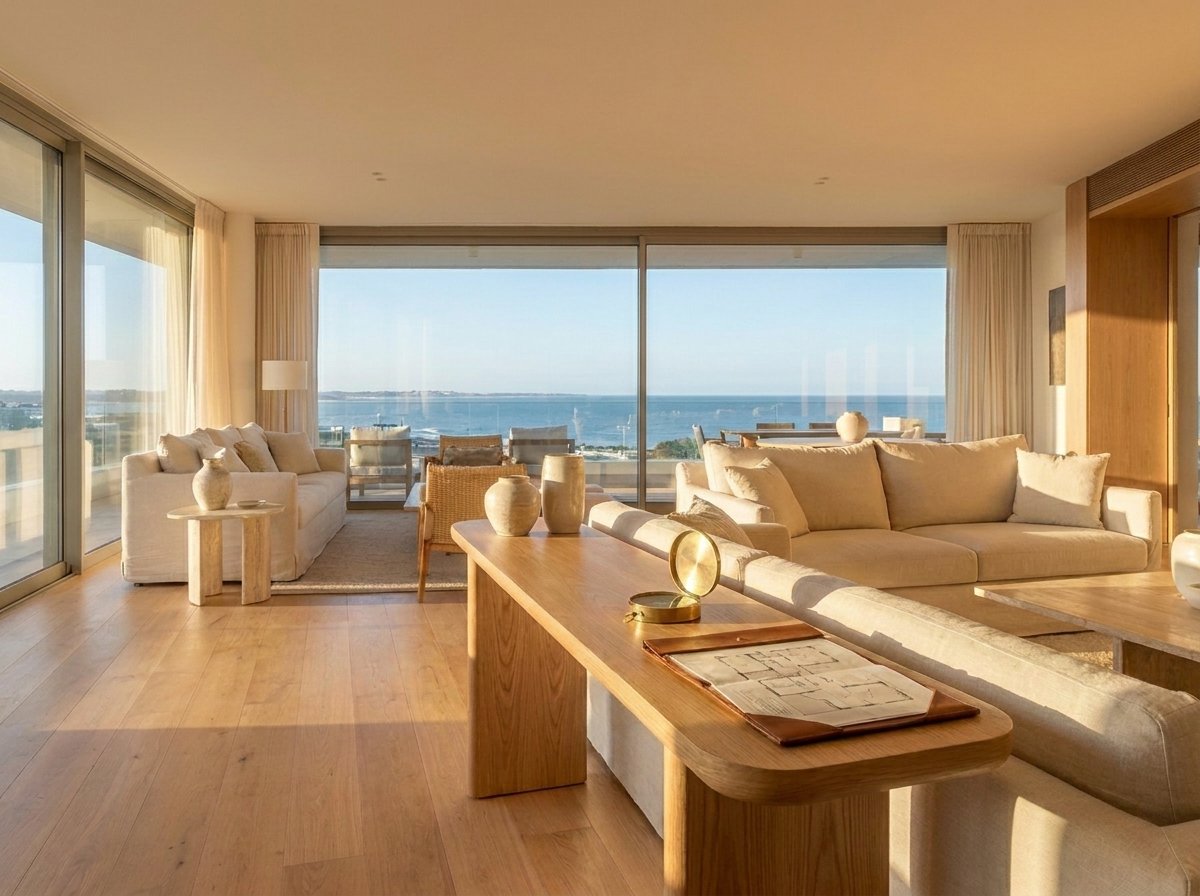
Prime coastal real estate is naturally marketed around views, terraces, amenities, floor level and architectural identity. Winter solar access is less photogenic, but it can shape the experience of the property for months every year.
That creates a useful selection advantage for disciplined buyers. A unit that appears less dramatic during a summer viewing may offer better year-round comfort if it has a clear northern horizon, sound glazing and a dry, well-designed envelope.
There is no automatic resale premium that can be assigned to orientation alone. Value remains property-specific. But solar orientation is a legitimate qualitative variable in buyer due diligence, especially where the intended use extends beyond the summer season.
10. Risks of oversimplifying the “buy north” rule
- Summer overheating: north-west and west glazing can require robust external shading.
- Glare: large panes need appropriate solar-control strategies.
- Marine exposure: ocean frontage adds wind and salt exposure to frames, hardware, seals and maintenance.
- Envelope quality: good orientation cannot fix poor glazing, air leakage or thermal bridging.
- Future shadowing: an empty plot to the north may not remain empty if planning rules allow development.
11. Northern Europe versus Uruguay: the same question, mirrored
For a European buyer, the easiest mental model is a mirror image. The south-facing winter preference familiar in Europe becomes a north-facing preference in Uruguay.
East and west retain their time-of-day character — morning and afternoon respectively. What changes across hemispheres is the side of the building that receives the most useful winter solar path.
12. A buyer’s solar due-diligence checklist
- Ask for true geographic north on the floor plan.
- Map the exact orientation of the living room, terrace and principal bedrooms.
- Test solar access around 21 June, not only during the summer sales season.
- Check shadows at approximately 9am, solar noon and 3pm.
- Identify current and potential future obstructions to the north.
- Review glazing type, frames, seals, insulation and visible thermal-bridge risk.
- Look for condensation, mould, peeling paint, staining or persistent damp odours.
- Check ventilation in bathrooms, kitchens, wardrobes and internal rooms.
- For houses, look for a genuine ocean-view plus north-facing strategy.
- For off-plan purchases, request a solar study or enough site documentation to reproduce one independently.
Conclusion: in Punta del Este, serious buyers should buy the winter as well as the view
Summer can hide weak orientation. Long days, warmer temperatures and terrace living make many coastal properties feel naturally bright in January. June is the more revealing test.
For buyers seeking four-season use, true north is the solar benchmark. North-west can be an excellent lifestyle compromise when afternoon warmth matters, provided summer shading is handled properly. In either case, orientation has to be assessed alongside shadowing, floor level and construction quality.
Along the coast towards José Ignacio, the most sophisticated answer is often architectural rather than geographical: keep the ocean view and create a second relationship with the north. That is one of the most useful questions an international buyer can bring to a property viewing.
FAQ – Property Orientation in Punta del Este
What is the best orientation for an apartment in Punta del Este?
For winter solar gain, north is the general benchmark. North-west can suit buyers who value afternoon warmth, while north-east provides more morning sun. The actual result depends on floor level and obstructions.
Should buyers avoid south-facing apartments in Uruguay?
Not automatically. South-facing homes can offer excellent views, stable daylight and lower summer solar load. For year-round use, buyers should look for dual orientation, strong insulation, good glazing and appropriate heating and ventilation.
Is Playa Mansa better than Playa Brava for sunlight?
Mansa generally favours afternoon light and Brava morning light, but neither label guarantees good winter solar exposure. The unit’s exact orientation and surrounding shadows matter more.
Why is north-facing preferred in Uruguay when south-facing is preferred in Europe?
Uruguay is in the Southern Hemisphere, where the sun culminates towards the north. Europe is in the Northern Hemisphere, where the winter solar preference is typically south-facing.
Does north-facing orientation prevent damp or mould?
No. Solar access may warm surfaces and support drying, but moisture problems require separate technical investigation. Leaks, condensation, insulation, thermal bridges and ventilation all matter.
How can a buyer test winter sunlight before purchasing?
Analyse the sun path around 21 June at several times of day and include shadows from buildings, trees and terrain. For apartments, use the exact floor elevation rather than only the building footprint.
Is north-west better than due north?
Not for maximising total winter solar access. Due north is the more balanced reference. North-west may be preferable for lifestyle reasons if afternoon sun is particularly valuable.
What orientation works best for an ocean-view house near Manantiales or José Ignacio?
Dual-aspect planning is often the strongest solution: retain the ocean-facing south or south-east frontage and create a meaningful north-facing living area, garden, courtyard or terrace for winter use.
Sources
- INUMET — Automatic weather stations.
- INUMET — Winter climatology.
- NOAA Global Monitoring Laboratory — Solar Calculator and solar-position equations.
- Intendencia de Maldonado — official Punta del Este map.
- Intendencia de Maldonado — La Barra and Manantiales.
- Intendencia de Maldonado — José Ignacio–Garzón Local Plan, OR.01 map.
- Australian Government — YourHome, Orientation and Passive heating.
- U.S. Environmental Protection Agency — Moisture control in homes.
Solar-angle and shadow-length calculations in this article are simplified geometric illustrations and do not replace a property-specific architectural or solar-access study.
Considering a property purchase in Punta del Este or coastal Maldonado?
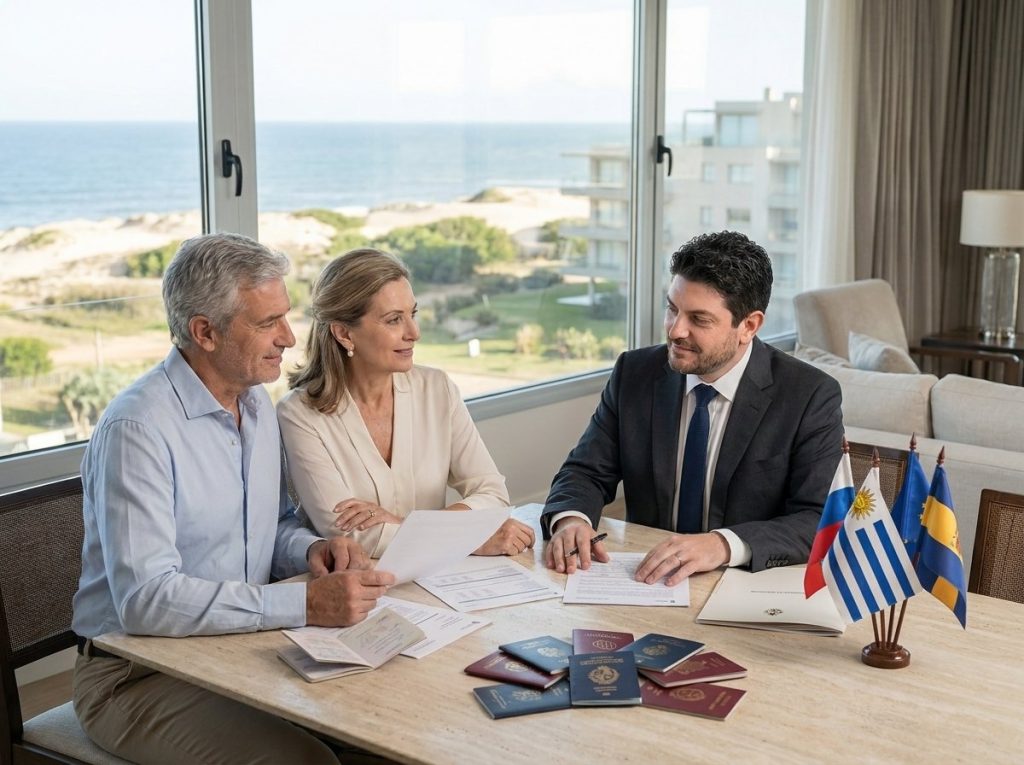
Punta Select Club is a structured first point of entry for international buyers and investors who want to invest the market, compare locations and assess the criteria that matter beyond the sales brochure.
We can discuss your project privately and, where appropriate, coordinate introductions through authorised local partners for matters requiring regulated or technical expertise.
Disclaimer
This article is published for informational and educational purposes only. The information reflects sources and knowledge available as of publication in August 2026. Real-estate markets, planning rules, regulations, climate references and professional practices may change.
Solar-position figures and shadow examples are general approximations. Actual solar access depends on precise location, elevation, floor level, neighbouring buildings and vegetation, terrain, window geometry and possible future development.
The content does not constitute legal, tax, financial, technical or real-estate advice and is not a recommendation to purchase or invest. All material facts should be independently verified and qualified, authorised professionals should be consulted where appropriate.
Punta Select Club operates as an information, market-orientation, buyer-coordination and introduction agency.