UYU Peso or US Dollar? Understanding dollarization in everyday Uruguayan’s life
One national currency, two monetary languages
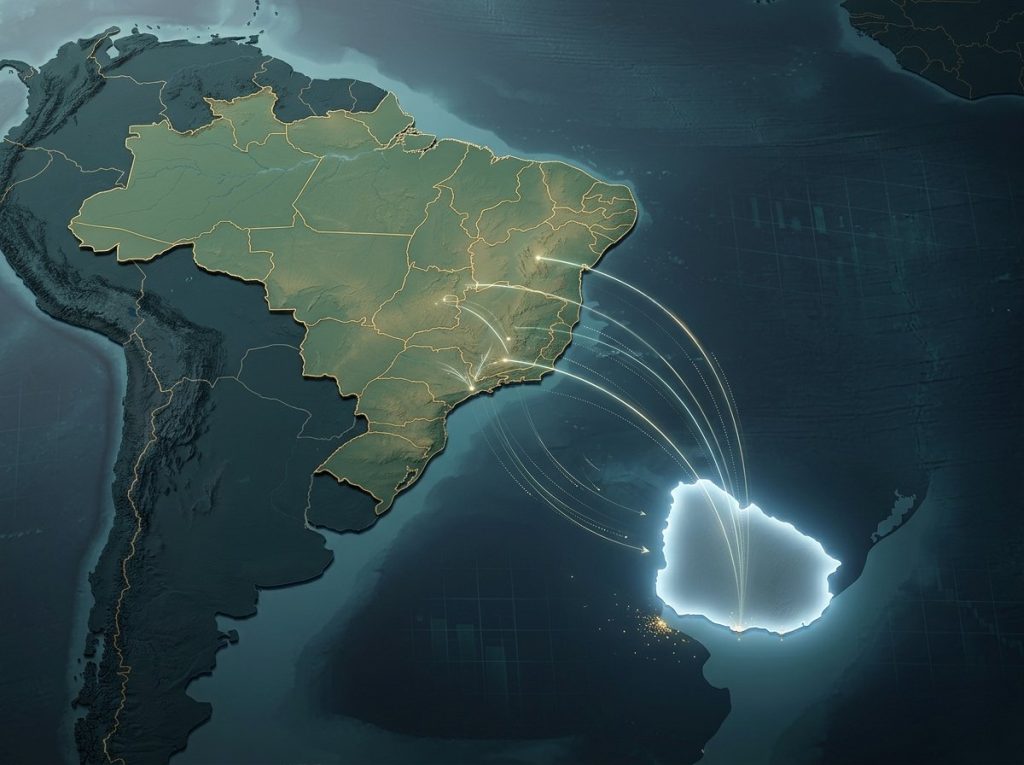
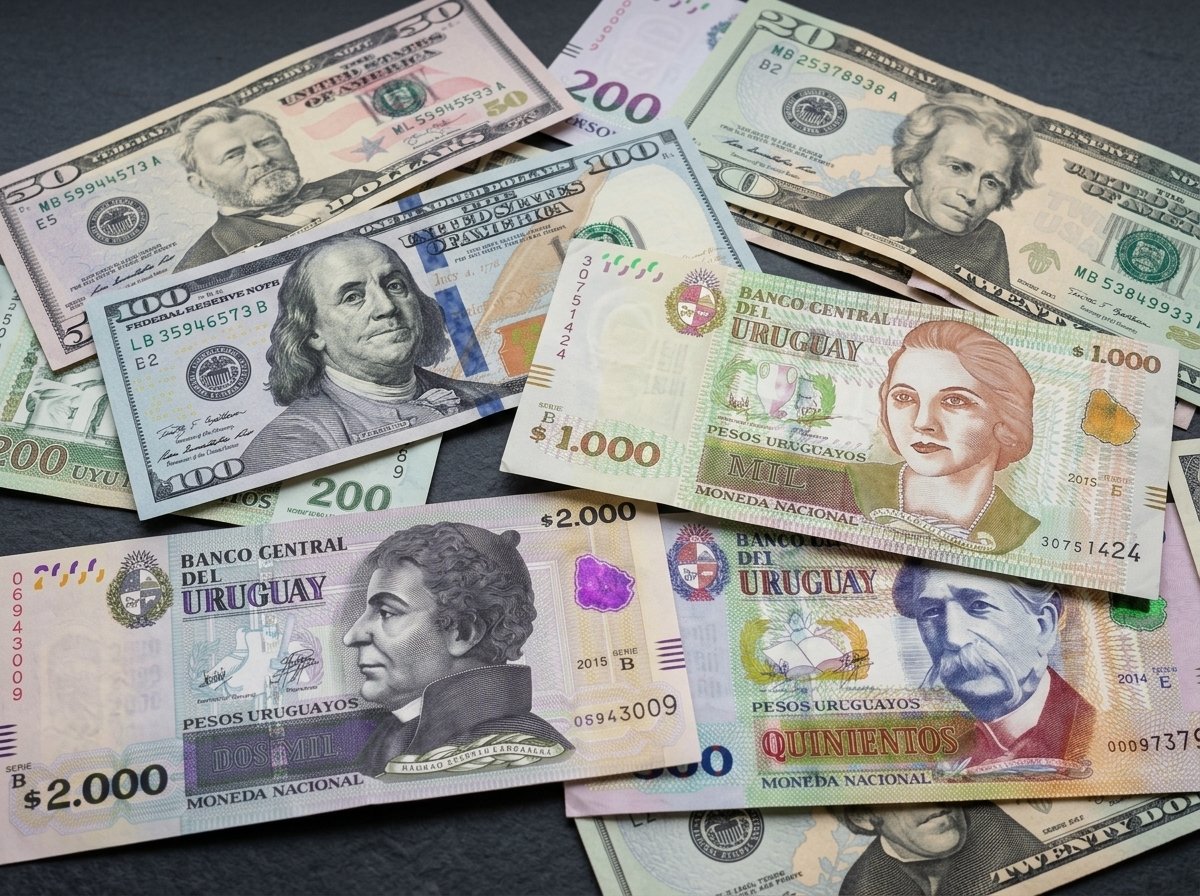
Uruguay presents newcomers with an unusual monetary landscape. Groceries, restaurant bills and most everyday purchases are quoted in Uruguayan pesos. Move into higher-value purchases, however, and the US dollar begins to appear. Cars are commonly advertised in dollars. Some durable consumer goods may carry USD prices. Real estate is routinely discussed in dollars. This is called “Uruguay Dollarization”.
Yet Uruguay is not an officially dollarized country. Its national currency remains the Uruguayan peso, or UYU. The country retains its own central bank and conducts an independent monetary policy.
The distinctive feature is the role the dollar has acquired alongside the peso: not merely as a foreign currency, but as a unit in which Uruguayans often measure assets, savings and wealth.
The Central Bank of Uruguay has a specific term for part of this phenomenon: “cultural dollarization.” It describes the habit of measuring or expressing value in dollars even when the underlying transaction does not necessarily take place in USD.
Executive summary
- Uruguay has not officially adopted the US dollar; the Uruguayan peso remains its national currency.
- Pesos dominate much of everyday domestic consumption.
- The higher the value of an asset or durable good, the more likely USD pricing becomes.
- Real estate and automobiles are prominent examples of dollar-denominated pricing.
- Dollarization also remains deeply embedded in household savings and the financial system.
- A USD price does not automatically mean the transaction must physically be settled in dollars.
- International investors should distinguish between an asset’s pricing currency and its underlying economic exposure.
How history created Uruguay’s relationship with the dollar
Uruguay’s attachment to the dollar did not emerge from a recent policy decision. Decades marked by periods of inflation and currency depreciation encouraged households and businesses to seek a more stable benchmark for savings and long-term wealth.
The country’s monetary history illustrates the scale of those changes. According to the Central Bank of Uruguay, the monetary unit was changed in 1975 with three zeros removed and changed again in 1993, when another 1,000-to-1 conversion created the current Uruguayan peso.
Today’s macroeconomic environment is substantially different. Inflation has become far more contained and monetary policy has gained credibility. Nevertheless, monetary habits built over generations have proved persistent.
This creates one of modern Uruguay’s most interesting economic characteristics: greater peso stability has not automatically eliminated the dollar as the country’s preferred language for parts of private wealth.
Cultural dollarization: measuring wealth in dollars
The Central Bank’s research into cultural and financial dollarization among Uruguayan households helps explain the phenomenon.
A household may receive income and pay daily expenses in pesos while valuing its home, vehicle and financial wealth in dollars.
This is different from simply holding foreign currency. The dollar becomes an accounting language through which wealth is understood.
BCU research links this behaviour particularly closely to ownership of real assets and residential property.
A useful shorthand is that Uruguay largely lives in pesos while a significant part of its private wealth is thought about in dollars.
The more valuable the asset, the more visible the dollar becomes
Another Central Bank study on US-dollar pricing in consumer markets analysed millions of product listings and identified an important relationship between product value and the likelihood of USD pricing.
Durable goods also display materially greater dollarization than many everyday consumer categories.
| Category | Common Reference | Typical Economic Logic |
|---|---|---|
| Groceries and everyday consumption | UYU | Domestic spending |
| Everyday services | UYU | Locally generated costs and income |
| Appliances and higher-value durable goods | UYU or USD | Value, imports and commercial pricing practices |
| Cars | Frequently USD | High-value durable and imported product |
| Real estate | Frequently USD | Long-established wealth convention |
| Savings | UYU, UI and USD | Currency and inflation diversification |
This explains an otherwise surprising experience: a shopper may fill an entire supermarket basket priced in pesos and then find a major appliance in the same store displaying a US-dollar price.
There is no contradiction. Two pricing conventions simply coexist.
Real estate is the clearest illustration
Property provides perhaps the most visible example of Uruguay’s dollarized mindset.
A home in Uruguay is fundamentally a domestic asset. Its economics depend on Uruguayan incomes, construction costs, credit conditions, supply, demand and local demographics. Yet the market has historically adopted the dollar as a standard unit for quoting and structuring a large share of property transactions.
As a result, a property in Punta del Este, Maldonado or Montevideo is naturally described as being worth US$300,000 or US$1 million rather than its peso equivalent.
The user-provided Why Uruguay report reviewed for this article similarly characterizes Uruguay as a highly dollarized economy and highlights the use of USD in property markets.
This is convenient for international investors who already measure capital in dollars. It should not, however, be mistaken for a guarantee that Uruguayan property values will remain stable in USD.
Does a dollar price mean you must pay in dollars?
Not necessarily.
Uruguay makes it particularly important to distinguish between the currency in which a price is quoted and the currency in which the transaction is settled.
A retailer may quote an item at US$200 yet allow payment in pesos using an applicable exchange rate. Another merchant may process the transaction directly in USD. The exact practice depends on the seller and payment method.
Uruguay’s tax administration, the DGI, explicitly accommodates foreign-currency transactions in the electronic invoicing framework and requires the exchange rate used in the transaction to be identified when a conversion applies.
The practical question is therefore not merely “What is the dollar price?” but also “Which currency will actually be charged and at what exchange rate?”
Why currency-exchange services are so visible
The ease with which residents can move between pesos and dollars makes the two-currency reality highly visible in everyday life. Service networks such as Abitab and Redpagos, together with regulated currency-exchange businesses and financial institutions, are part of Uruguay’s commercial landscape.
This should not be viewed purely as an infrastructure for tourists. Central Bank research demonstrates that dollarization is a domestic phenomenon tied to the savings and asset holdings of Uruguayan households themselves.
In international coastal markets such as Maldonado and Punta del Este, tourism, foreign residents and a heavily USD-oriented property market make that structure even easier to observe.
The broader role of Abitab, Redpagos and Uruguay’s payment networks deserves a separate analysis of its own.
Financial dollarization remains significant in 2026
The phenomenon reaches well beyond retail price tags.
In a May 2026 technical report, the International Monetary Fund continued to describe Uruguay’s financial system as highly dollarized.
Foreign-currency deposits remain sufficiently important that dollarization affects how effectively peso monetary policy is transmitted through the domestic financial system.
A separate IMF study devoted specifically to Uruguay has also identified it as one of the more financially dollarized economies in the Western Hemisphere.
Dollarization is therefore simultaneously a pricing phenomenon, a household behaviour, a banking characteristic and a wealth-management convention.
The 2026 paradox: a stronger peso environment with persistent dollar habits
The current policy environment makes Uruguay particularly interesting.
As inflation has become more contained and monetary credibility has improved, the Central Bank has been working to deepen saving, lending and investment in domestic currency.
During 2026, the BCU announced measures designed to strengthen peso and inflation-indexed financial markets and explicitly discussed with banks the objective of reducing structural financial dollarization.
This should not be interpreted as an attempt to eliminate private use of the US dollar. The policy objective is to reduce vulnerabilities and develop deeper domestic-currency markets.
The likely direction is therefore one of gradual rebalancing rather than sudden disappearance of the dollar.
Why this matters to an international investor
The most important lesson is that pricing currency and economic exposure are not the same thing.
A property bought for US$400,000 may still generate expenses in pesos. Rental revenue may be in pesos or dollars depending on the market segment. Maintenance, local labour, taxes and utility-related costs can follow domestic economic conditions.
An investor should therefore map five separate currency exposures:
- the currency in which the asset is valued;
- the currency used to purchase it;
- the currency of any financing;
- the currency in which income is received;
- the currency in which operating expenses are incurred.
A sixth question is equally important: in which currency does the investor ultimately measure portfolio performance?
For someone whose wealth is benchmarked in USD, EUR or another currency, this distinction materially affects return calculations.
Potential advantages for internationally mobile capital
Uruguay’s widespread use of the dollar can make parts of the market easier for international investors to navigate.
Dollar property pricing allows investors with USD-based portfolios to compare acquisition prices without first translating every asset into an unfamiliar local currency.
Where both available capital and transaction settlement are in USD, it may also reduce unnecessary currency conversions.
Uruguay’s financial system is accustomed to handling multiple currencies, which can be operationally useful for internationally mobile families and investors.
None of these features constitutes an investment guarantee or automatic hedge against currency movements.
Risks and points to watch
Currency mismatch
Borrowing in dollars while earning in pesos creates a potentially significant FX exposure. A strengthening dollar can materially increase the local-currency burden of the debt.
Conversion spreads
The difference between buying and selling rates and the exchange rates applied by banks, cards, merchants or exchange houses can affect the true cost of a transaction.
A dollar label can create false comfort
A Uruguayan asset quoted in USD remains exposed to Uruguayan supply, demand, regulation and economic conditions.
The monetary structure is evolving
The BCU’s 2026 initiatives demonstrate a policy preference for deeper use of the national currency. Financial products and household behaviour can gradually change as a result.
International comparison: Uruguay is not Ecuador or Panama
Uruguay should be distinguished from countries that have formally incorporated the US dollar into their monetary system.
Ecuador adopted the US dollar as legal tender in 2000, replacing the sucre.
In Panama, the balboa is the national currency at parity with the US dollar and the dollar has long circulated legally in domestic transactions.
Uruguay follows a different model. It retains the peso, an active central bank and independent monetary policy while allowing the dollar to remain deeply embedded in private savings and asset pricing.
It is therefore more accurate to describe Uruguay as a highly dollarized economy than as a formally dollarized country.
A third reference: the Unidad Indexada
Uruguay’s monetary landscape is actually slightly more sophisticated than a simple peso-versus-dollar model.
The Unidad Indexada, or UI, is an inflation-indexed unit of account used in certain loans, contracts and financial instruments.
It is not another currency circulating in stores. Instead, it allows a contractual value to maintain a link to domestic purchasing power over time.
An international investor may therefore encounter three different monetary references: pesos for much of the domestic economy, dollars for many high-value assets and UI for certain long-term financial obligations.
Conclusion
Uruguay’s peso-dollar coexistence is not a random commercial oddity. It is the product of monetary history, household saving behaviour, market conventions and decades of wealth being measured in foreign currency.
The peso remains the country’s monetary foundation and dominates much of everyday life. The dollar becomes increasingly visible as spending gives way to savings, durable goods and major assets.
At the same time, the country is now attempting to deepen the role of its own currency as macroeconomic stability improves.
For an international investor, understanding this structure is essential to interpreting prices correctly, assessing exchange-rate exposure and measuring returns.
Uruguay does not operate with two official currencies. It operates with one national currency and a second financial language that has become deeply embedded in the way wealth is measured.
FAQ – Currency and Dollarization in Uruguay
What is Uruguay’s official currency?
The national currency is the Uruguayan peso, ISO code UYU. Uruguay maintains its own central bank and independent monetary policy.
Is the US dollar an official currency in Uruguay?
No. The US dollar is widely used for savings, asset pricing and certain transactions, but it has not replaced the peso as Uruguay’s national currency.
Why is Uruguayan real estate priced in dollars?
The practice reflects a long-established wealth convention. Central Bank research identifies residential property as an important component of Uruguay’s cultural dollarization.
Why can some appliances be priced in dollars?
BCU research indicates that USD pricing becomes more common as product value rises, with durable goods displaying greater dollarization than many routine consumer goods.
If something is priced in dollars, must it be paid for in USD?
Not necessarily. Depending on the merchant and payment method, the transaction may be settled in dollars or converted into pesos. Buyers should confirm the exchange rate that will be applied.
Do Uruguayans save in US dollars?
Yes. Foreign-currency savings and deposits remain an important part of the domestic financial system and the IMF continues to describe Uruguay as highly financially dollarized.
Is Uruguay trying to de-dollarize?
The Central Bank is encouraging greater use of pesos and inflation-indexed instruments for saving, lending and investment. The objective is to reduce vulnerabilities and deepen domestic-currency markets rather than necessarily eliminate private use of the dollar.
Is Uruguay dollarized like Ecuador?
No. Ecuador formally adopted the US dollar as legal tender. Uruguay continues to issue and manage its own currency.
What is Uruguay’s Unidad Indexada?
The UI is an inflation-indexed unit of account used in certain loans and long-term obligations. It is not a separate currency used for everyday payments.
Sources
- Central Bank of Uruguay — Cultural and Financial Dollarization of Uruguayan Households
- Central Bank of Uruguay — Persistence of US-Dollar Pricing in Consumer Markets
- Central Bank of Uruguay — Banknotes, Coins and Monetary History
- Central Bank of Uruguay — Agenda to Strengthen Use of the National Currency, 2026
- Central Bank of Uruguay — Measures to Strengthen Domestic-Currency Saving, Lending and Investment, 2026
- Dirección General Impositiva — Exchange Rates in Electronic Tax Documents
- International Monetary Fund — Uruguay: Monetary Policy Implementation and Liquidity Management, 2026
- International Monetary Fund — Taming Financial Dollarization: The Case of Uruguay
- Central Bank of Ecuador — US Dollar as Legal Tender
- Superintendency of Banks of Panama — Monetary and Banking History
Considering Uruguay?
Currency is only one component of an international investment decision. Acquisition currency, rental flows, peso-denominated operating expenses, financing and taxation should be assessed together.
Punta Select Club provides a structured first point of entry for international investors seeking market orientation in Uruguay, selected access to certain opportunities and, where appropriate, introductions through authorized local partners.
Disclaimer
This article is published solely for informational and educational purposes. The information reflects sources and knowledge available as of 19 August 2026. Regulations, taxation, public and monetary policies, banking and commercial practices, markets and exchange rates may change.
Relevant information should be independently verified before any decision or transaction. Nothing in this article constitutes legal, tax, financial, banking, investment or real-estate advice.
Each investor’s circumstances require individual assessment by appropriately qualified and, where required, licensed professionals in the relevant jurisdictions.
Punta Select Club operates as a private information, market-orientation and buyer-coordination agency and facilitates introductions through authorized local partners where appropriate.