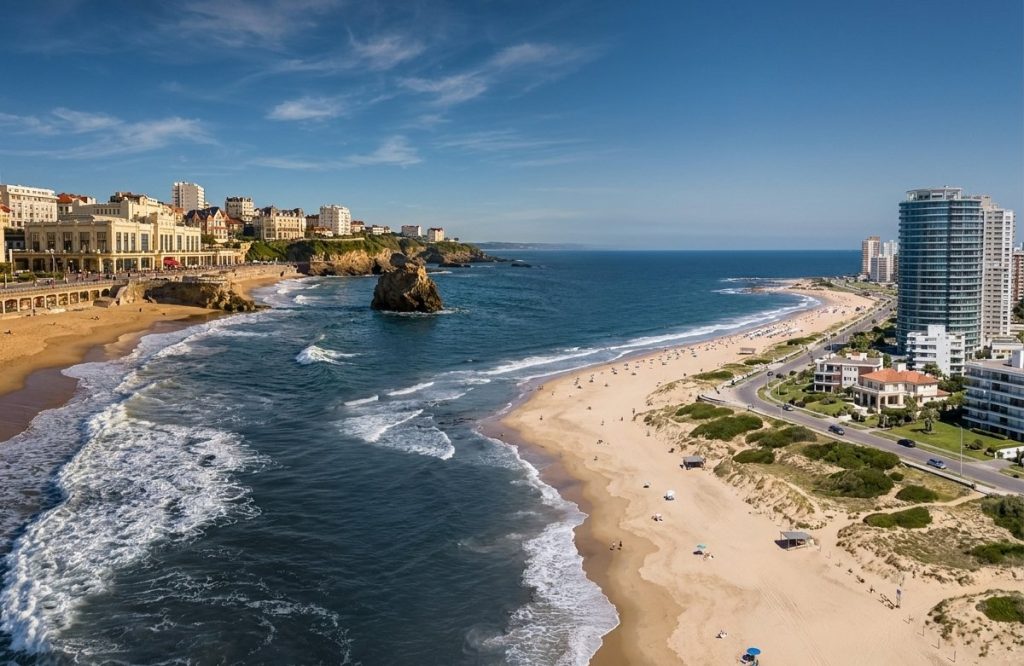
For decades, Punta del Este was not simply Uruguay’s best-known resort. For international buyers, it was effectively the country’s premium real-estate geography. Towers, villas, marinas, beach clubs and summer social life were concentrated around a brand with exceptional recognition across the Southern Cone.
Manantiales Golf and the Rise of the Uruguayan Riviera: How Punta del Este is becoming a wider premium territory
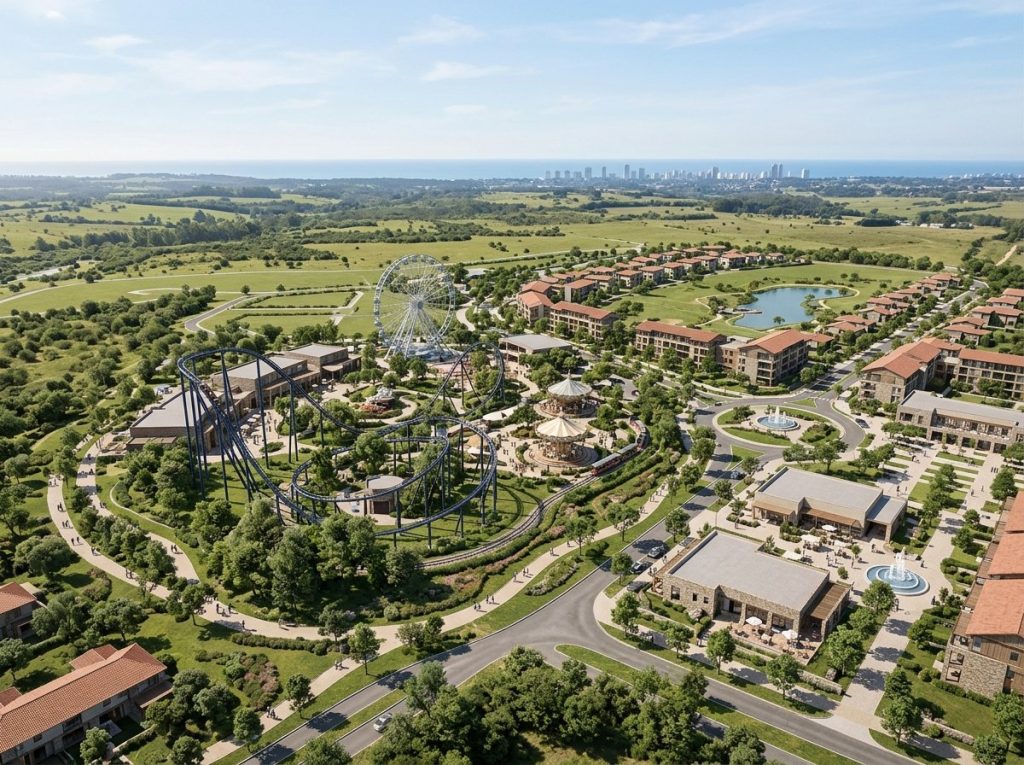
That geography is widening. La Barra, Manantiales and José Ignacio have developed increasingly distinct premium identities, while investment is also moving inland towards larger plots, private communities, cultural institutions, schools and sports facilities. The coastline is no longer the only organising axis.
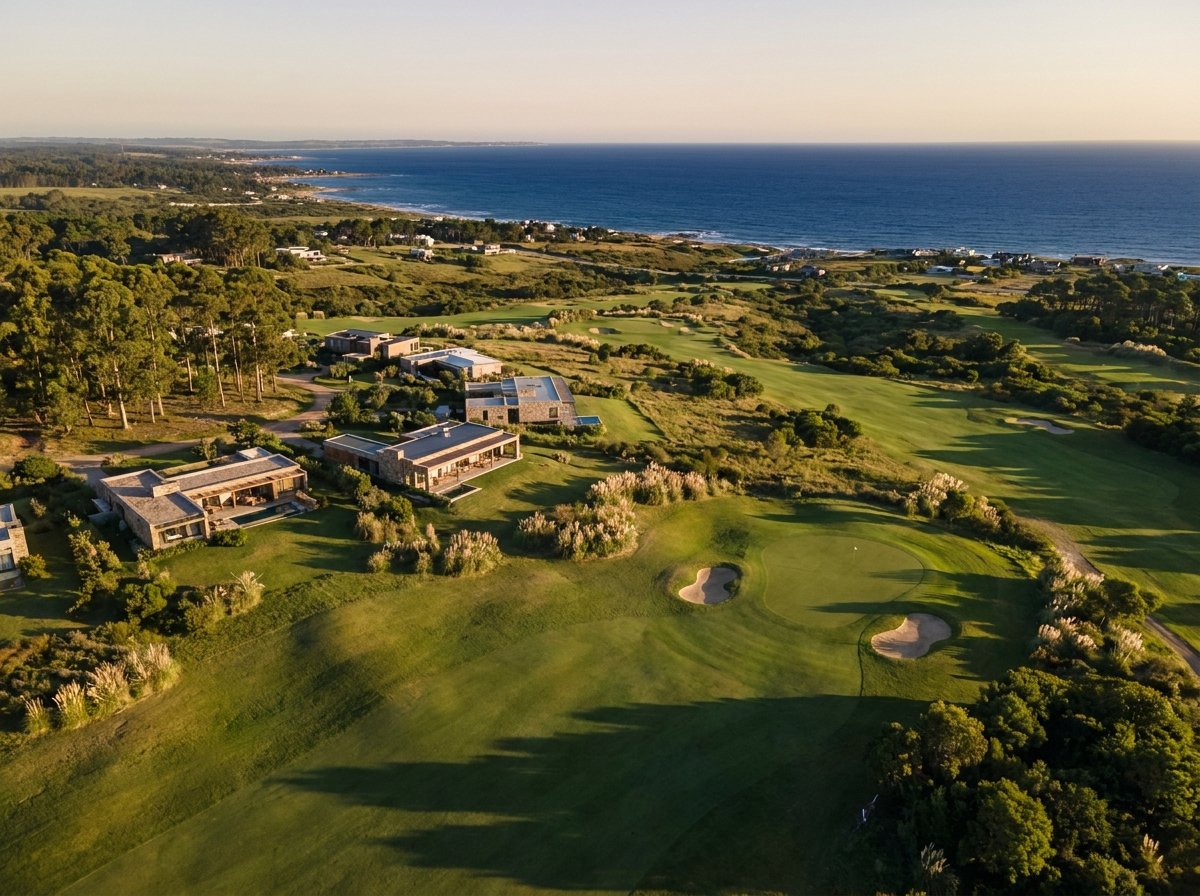
Manantiales Golf, a USD 42.5 million sports and wellness project presented in August 2026 to President Yamandú Orsi and Maldonado Governor Miguel Abella, is one of the clearest markers of that shift. Planned on Route 104 opposite the MACA contemporary art museum, the development combines a 27-hole golf facility with a 3,000 m² Sport & Wellness Center and a year-round operating model.
Punta Select Club uses the term “Uruguayan Riviera” as an editorial and investment-geography framework for this emerging territory. It is not an official administrative designation. It describes a market in which Punta del Este remains the international gateway while premium residential and lifestyle demand spreads eastwards and inland.
Executive summary
- Manantiales Golf has announced USD 42.5 million of sports and wellness investment: USD 30.3 million for the golf course and Club House and USD 12.2 million for the Sport & Wellness Center.
- The golf component is planned as 27 holes across three independent nine-hole loops on almost 100 hectares.
- The location — Route 104, opposite MACA, roughly 12 km from José Ignacio and 18 km from Punta del Este — is strategically important because it sits inland from the traditional beachfront market.
- The project targets year-round activity and forecasts 8,200 visitor rounds annually, including about 2,100 between April and November. These are developer projections, not established performance.
- Earlier 2026 reporting referred to a potential residential component of up to roughly 800 lots across a wider landholding of around 300 hectares. That component should be treated as planned and subject to separate approvals.
- There is no announced PGA TOUR event at Manantiales as of the publication date.
- The reference model is Buenos Aires Golf Club, another 27-hole facility that hosted the 2000 World Cup won by Tiger Woods and David Duval.
- For global investors, the deeper story is territorial: Maldonado is developing a broader, more service-rich premium ecosystem that aims to operate beyond the summer season.
What has actually been announced at Manantiales
Manantiales Golf SAD is being advanced by Gianfranco Macri, Pablo Rubio and Mariano de Llano. Their stated ambition is to position the Manantiales–José Ignacio corridor as an international hub for sport, tourism and wellness.
| Component | Announced scope | Investor relevance |
| Sports investment | USD 42.5 million | Applies to golf and wellness infrastructure, not to every potential real-estate component on the wider site. |
| Golf | 27 holes, three nine-hole loops, almost 100 ha | Creates operational flexibility for tournaments, members and maintenance. |
| Sport & Wellness | 3,000 m² indoor center | Broadens demand beyond golfers to families, residents and year-round users. |
| Location | Route 104, opposite MACA | Strengthens the inland Manantiales axis and its connection to José Ignacio. |
| Timeline | Work intended to begin in 2026, with an approximately three-year build-out | A development target that remains subject to execution and approvals. |
| Membership | Up to 1,500 members targeted | Points to a permanent club community rather than a purely seasonal attraction. |
The wider offer is equally telling: tennis, padel, football, a covered driving range, heated pool, spa, hammam, a gym of more than 1,000 m², coworking, children’s facilities and health-oriented services. The proposition is designed around repeated daily use, not simply eighteen holes during peak summer.
The real story is bigger than golf
A golf course can be viewed as a leisure asset. In the current Maldonado context, this one is better understood as a territorial maturity signal.
A destination changes category when investment moves beyond new homes and begins to create the infrastructure that supports everyday life: schools, sports clubs, culture, health and wellness, restaurants, coworking, water and sanitation systems, and services that remain useful outside the tourist peak.
This is the distinction between a successful seasonal resort and a potentially durable residential ecosystem. For long-term investors, that shift matters because the depth of a location’s services can influence who is willing to live there, how long they stay and how broad the future buyer pool becomes.
From Punta del Este to a broader Uruguayan Riviera
The historical market map placed Punta del Este at the centre and treated surrounding areas largely as extensions. The emerging map is more nuanced.
Along the coast, Punta del Este – La Barra – Manantiales – José Ignacio has become a sequence of complementary submarkets. Punta del Este offers density, towers, marinas and the broadest service base. La Barra and Manantiales combine beach culture, dining and lower density. José Ignacio has built an international identity around scarcity, privacy and trophy residential assets.
The more recent development is inland. Route 104 connects the coast to country estates, private residential schemes and cultural assets. MACA already created an international cultural anchor. Manantiales Golf adds a large sports and wellness destination.
Punta del Este remains the global brand. The Uruguayan Riviera is becoming the territory behind the brand.
Route 104 and the emergence of an inland premium axis
Manantiales Golf is not on the beachfront. That is precisely why its location deserves attention.
Historically, land behind Manantiales could be evaluated largely as rural or country-estate property with proximity to the coast. As major destination infrastructure appears, location can be reframed around a broader network: MACA, golf, José Ignacio, Manantiales, La Barra, the beaches and access to Route 9.
This does not prove that surrounding land prices will rise. Infrastructure can become a location catalyst, but the property outcome depends on execution, access, services, zoning, supply and real demand. A disciplined investor should measure the effect rather than assume it.
Golf, polo, art and wellness: building destination infrastructure
Manantiales Golf is not the only high-value sports project in the area. A separate development near José Ignacio has been presented around an international-level polo club, with more than USD 30 million of infrastructure planned across a 223-hectare urban development. That project remains subject to approvals and its delivery timetable is prospective.
The pattern matters more than the headline numbers. Golf and polo can create international communities, longer stays, events, specialist services and networks of high-spending users. MACA contributes a cultural layer. Residential projects provide the housing stock. Wellness and sports infrastructure support year-round routines.
Together, these elements suggest that the Manantiales–José Ignacio corridor is being built as a multi-purpose lifestyle destination rather than simply a collection of summer homes.
Year-round demand is the key economic test
Punta del Este’s summer season is a major competitive advantage, but it has also historically concentrated economic activity into a short period. The strategic challenge is to create reasons to visit, live and spend in May, July, September and November.
Manantiales Golf’s business model forecasts 8,200 visitor rounds per year, including approximately 2,100 from April through November. The promoters estimate that this traffic could generate about USD 1.5 million in additional annual off-site tourism spending across accommodation, restaurants, transport and retail. These are forecasts supplied by the project and should be treated as such.
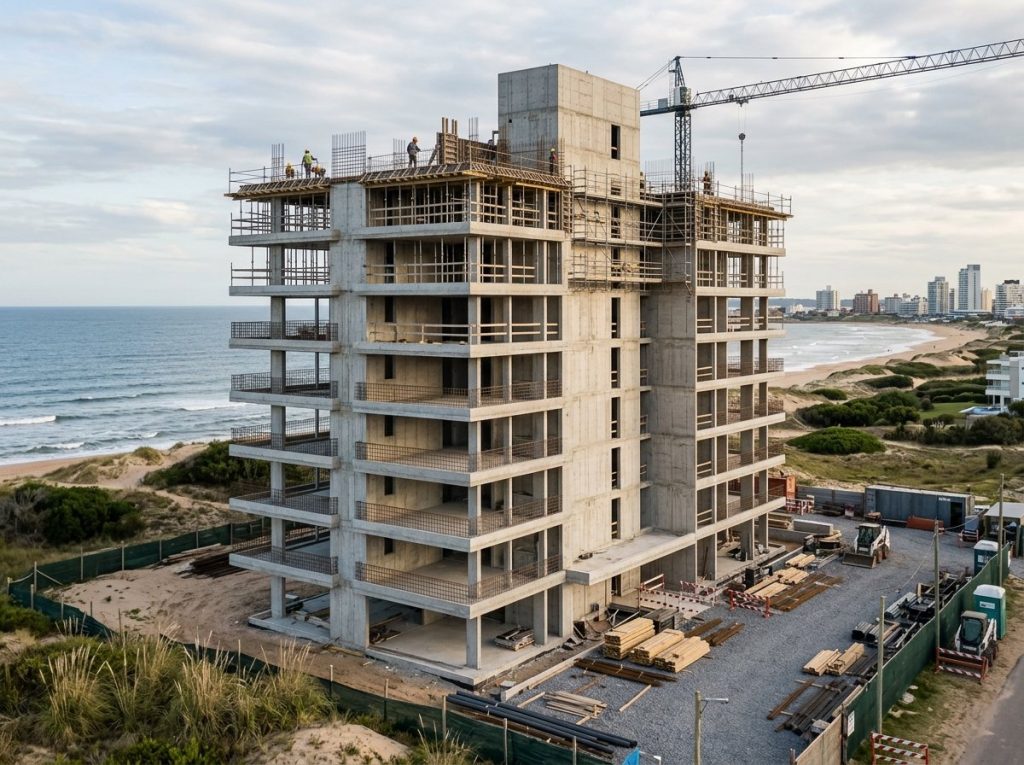
Public data point in the same strategic direction. Maldonado’s government reported that around 5.92 million m² of construction were approved between 2015 and 2025, including roughly 748,000 m² in the final year of that period, and explicitly linked the development cycle with the consolidation of Maldonado as a year-round residential destination.
Infrastructure is following population growth. In June 2026, OSE described an approximately USD 55 million water and sanitation program for Maldonado, planned over roughly three and a half years and including a new main supply line towards José Ignacio.
For an investor, the combination is more meaningful than any single project: private capital, demographic growth and public infrastructure are increasingly responding to the same geography.
Why international buyers should care
International buyers do not purchase square metres in isolation. They purchase access, services, lifestyle, future liquidity and a location’s ability to remain relevant.
The widening of the Riviera changes both the asset universe and the underlying buyer motivations.
- More asset types: the opportunity set extends beyond Punta del Este apartments to houses, estates, larger land plots and lower-density communities.
- Broader demand: future buyers may include full-time residents, internationally mobile families, entrepreneurs, retirees and lifestyle buyers whose priorities include schools, sport, wellness and nature.
- Greater due-diligence needs: early-stage locations can offer optionality, but they also require sharper distinction between completed infrastructure, approved projects and marketing concepts.
Uruguay’s growing visibility in global wealth mobility
The regional development story coincides with Uruguay’s stronger profile among internationally mobile families. Henley & Partners assigns Uruguay a 2026 Wealth Mobility Competitiveness Score of 71.8. In the Visual Capitalist presentation of the data, Uruguay ranks ahead of Switzerland, Monaco, Germany, France, Brazil and the United States on this specific measure.
The measure needs to be understood correctly. It is not a real-estate return ranking and it does not measure the actual number of wealthy people relocating in a given year. It evaluates structural competitiveness using factors that include tax treatment, rule of law, residency pathways, stability and the business environment.
A separate Henley & Partners measure, the Global Investment Risk and Resilience Index updated in May 2026, places Uruguay 34th out of 150 jurisdictions with a score of 69.28. This is a useful counterweight to simplistic marketing: Uruguay is not first in every global measure, but its combination of wealth-mobility competitiveness and regional resilience is increasingly distinctive.
The tax framework is also part of the conversation. Uruguay’s Law 20.446 introduced Article 24-BIS for certain new tax residents from 2026. Subject to statutory conditions, it provides an IRNR option for the year of the residence change and the following ten fiscal years in respect of the capital-income categories identified by the law. It should not be described as a blanket exemption on all foreign income, and any relocation analysis must also address the tax rules of the country being left.
Will Manantiales Golf be part of the PGA TOUR?
No PGA TOUR event has been officially announced for Manantiales Golf as of the publication date. A 27-hole championship-style facility does not automatically obtain PGA TOUR status.
The three-nine configuration is nevertheless useful for tournament operations. It allows different eighteen-hole combinations and can keep part of a club available while another section is used for competition or maintenance.
The relevant precedent is Buenos Aires Golf Club, which the promoters reference as a model. It also has 27 holes across three nines and hosted the 2000 World Cup. The PGA TOUR records that Tiger Woods and David Duval won for the United States, finishing three shots ahead of Argentina’s Ángel Cabrera and Eduardo Romero.
That history supports an international-event ambition; it does not constitute a future PGA TOUR commitment. Any claim about a particular circuit should wait for formal confirmation by the relevant organisers.
What about the proposed 800 residential lots?
Media reporting in July 2026, drawing on material related to the environmental process, referred to a wider roughly 300-hectare landholding and a potential residential subdivision of approximately 800 lots around the golf component.
This could materially alter the scale of the area if implemented. However, the same reporting indicated that the residential subdivision had not yet been filed with the Maldonado government at that point, while the golf component was following its own environmental process.
The responsible investment interpretation is therefore to separate the announced sports project from the potential residential development. The latter should be monitored through its planning, environmental and infrastructure approvals before being treated as executable inventory.
Why early reports mentioned USD 900,000 rather than USD 42.5 million
July reporting cited an estimated USD 900,000 for certain golf works described in environmental documentation. The August presentation, by contrast, allocates USD 30.3 million to the golf course and Club House and USD 12.2 million to the Sport & Wellness Center.
The most cautious interpretation is that these figures reflect different scopes, phases and cost definitions. Without a publicly available consolidated budget reconciling each line item, they should not be treated as directly comparable. The USD 42.5 million figure is best described as the comprehensive sports-and-wellness investment announced by the developers in August 2026.
International comparison: how premium coastal markets acquire depth
Comparisons with the French Riviera, Costa del Sol or Algarve can easily become marketing clichés. Maldonado has a different scale, history, infrastructure base and pricing structure.
The useful comparison is structural. Mature premium destinations rarely remain a narrow strip of beachfront real estate. Over time, their brand extends inland to estates, villages, golf, equestrian facilities, schools, culture, food and services.
The Uruguayan Riviera thesis is therefore not that Maldonado has already become another Côte d’Azur. It is that Punta del Este’s brand is beginning to support a broader territorial ecosystem, and that this expansion deserves to be analysed before it becomes fully mature.
Investment opportunities worth monitoring
| Theme | Potential rationale | Key due diligence |
| Route 104 land and residences | Increasing concentration of cultural, sports and residential infrastructure. | Zoning, utilities, access, water, sanitation, buildability and real comparable transactions. |
| Year-round premium housing | A broader resident base could reduce dependence on peak-summer demand. | Off-season services, operating costs, schools, healthcare, security and resale depth. |
| Early-stage developments | Potential access before a corridor reaches full maturity. | Developer track record, permits, contracts, financing, milestones and guarantees. |
| Lifestyle assets | Golf, polo, art and wellness may increase differentiation. | Avoid paying today for infrastructure that remains only planned. |
| HNWI relocation | Uruguay combines lifestyle, institutional credibility and a competitive residency framework. | True tax residence, departure-country rules, treaties, CRS and independent professional advice. |
Risks and watchpoints
- Execution risk: announced schedules and scopes can change.
- Planning risk: golf, subdivisions and land-use changes follow different approval tracks.
- Environmental risk: irrigation, water management, biodiversity and drainage are material issues for a project of this scale.
- Pricing risk: proximity to planned infrastructure does not guarantee property appreciation.
- Liquidity risk: high-value assets can have a narrow buyer pool even in strong markets.
- Seasonality risk: year-round demand is strengthening, but the transition is not complete.
- Cross-border tax risk: becoming resident in Uruguay does not automatically terminate residence or tax obligations elsewhere.
Conclusion: Punta del Este was the destination; the Uruguayan Riviera is becoming the territory
Manantiales Golf matters because it fits into a wider pattern rather than because golf alone can transform a regional economy.
Construction is expanding across Maldonado. Public infrastructure is being upgraded in response to population growth. José Ignacio is attracting large sports-led and residential proposals. Route 104 is acquiring cultural and lifestyle infrastructure. Uruguay itself is becoming more visible in the global conversation around wealth mobility.
The investment map is consequently changing. Punta del Este remains the historical centre of gravity and the most recognisable global name, but the premium ecosystem now extends through La Barra and Manantiales to José Ignacio and increasingly into the countryside behind the coast.
For Punta Select Club, that shift supports a broader approach than simply sourcing an apartment or targeting a rental yield. The task is to understand the territory, distinguish delivered infrastructure from announcements, identify micro-locations where genuine service depth is emerging, and coordinate international buyers with authorised local operators and qualified professionals when a project moves from research to execution.
The Uruguayan Riviera is not yet a homogeneous market. That is precisely why it is worth studying now.
3. FAQ
What is Manantiales Golf?
Manantiales Golf is a planned international-level sports and wellness club on Route 104 in Maldonado. The announced program includes 27 golf holes on almost 100 hectares, a Club House and a 3,000 m² Sport & Wellness Center. The sports investment announced in August 2026 totals USD 42.5 million.
Where is Manantiales Golf located?
The project is opposite the Museo de Arte Contemporáneo Atchugarry on Route 104, approximately 12 km from José Ignacio and 18 km from Punta del Este. Its inland position is one reason it is strategically relevant to the evolving premium geography of Maldonado.
Why is the course planned with 27 holes?
Three independent nine-hole loops provide more operational flexibility than a single eighteen-hole routing. They can be combined into different eighteen-hole courses and can help a club accommodate tournaments, maintenance and member play at the same time.
Will Manantiales Golf host the PGA TOUR?
No PGA TOUR event has been officially announced at Manantiales as of August 29, 2026. The development has international tournament ambitions, but any link to a specific tour requires formal sporting and commercial agreements.
Are 800 residential lots definitely approved?
No. July 2026 reporting referred to a potential subdivision of approximately 800 lots across a wider roughly 300-hectare landholding. At that time the residential subdivision had not yet been filed with the Maldonado government according to the reports. It should therefore be treated as a proposed component subject to approvals.
What does Punta Select Club mean by the “Uruguayan Riviera”?
It is an editorial concept describing the premium territory extending from Punta del Este through La Barra, Manantiales and José Ignacio, with increasing inland depth around corridors such as Route 104. It is not an official administrative region.
Will the golf project automatically increase nearby property prices?
No. Major infrastructure can improve visibility, services and the perception of a location, but property values remain dependent on supply, demand, execution, zoning, access, economic conditions and actual buyer depth.
Why is this relevant to HNWIs considering Uruguay?
The project adds another layer of year-round lifestyle infrastructure in a jurisdiction that is gaining visibility for stability, residency and wealth mobility. That can strengthen the practical appeal of relocation, but any investment or residency decision must be based on individual circumstances and independently verified advice.
Does buying property in Uruguay automatically provide the 2026 tax holiday?
No. Tax residence and the new-resident regime have distinct statutory conditions. Law 20.446 created a regime for specified capital-income categories for certain new residents from 2026, but it is not a universal foreign-income exemption and must be coordinated with the tax rules of the departure country.
4. Sources
- El Observador – Manantiales Golf investment, facilities and year-round business model
- Maldonado Government – Presentation to President Yamandú Orsi and Miguel Abella
- Ministry of Environment – Manantiales Golf environmental process
- Infobae – Project design, location and visitor forecasts
- La Nación – Proposed residential component and environmental documentation
- Maldonado Government – Construction approvals 2015–2025
- OSE – Maldonado water and sanitation investment program
- El Observador – José Ignacio polo and residential development proposal
- Henley & Partners – Latin American Wealth Mobility Anchors 2026
- Henley & Partners – Global Investment Risk and Resilience Index
- Visual Capitalist -World’s Top Destinations for Wealth Migration
- IMPO – Law 20.446, Article 648 / Article 24-BIS
- Buenos Aires Golf Club – 27 holes and 2000 World Cup history
- PGA TOUR – 2000 World Cup at Buenos Aires Golf Club
- Manantiales Golf – Official project website
5. Contact Us
Would you like to understand the changing real-estate geography of Punta del Este, Manantiales and José Ignacio, assess a specific micro-market or explore a potential move to Uruguay?
Punta Select Club provides a structured first point of entry for international investors through market information, orientation, selected access to certain opportunities and buyer coordination. Where regulated services are required, we can facilitate introductions through authorised local partners and qualified independent professionals.
6. Disclaimer
This article is published solely for informational and educational purposes. The information, figures, project descriptions, schedules, rankings, tax regimes and regulatory references reflect information available and checked as of August 29, 2026 and may change without notice.
Investment amounts, employment figures, visitor volumes, tourism spending, construction schedules and other forward-looking figures attributed to private developments are estimates or targets supplied by the relevant promoters where stated and are not guaranteed outcomes. Real-estate components that remain subject to planning or other approvals should not be considered finally approved.
Nothing in this article constitutes legal, tax, financial, wealth, immigration or real-estate advice, an investment recommendation, an offer or a solicitation. Information should be independently verified and appropriate due diligence completed before any decision is made.
Tax residence and the consequences of relocation depend on each person’s individual facts and on the rules of Uruguay and every other relevant jurisdiction. Qualified independent professionals should be consulted in each country concerned.
Punta Select Club operates as a private information, market-orientation, selected-access and coordination agency. Regulated activities are carried out, where applicable, by authorised local partners and qualified independent professionals.